 Written by
Laiba Arif
·
Written by
Laiba Arif
·
Coaching Class vs. Makers' Muse STEM Enabled School (SES): An Honest Comparison for Parents
For years, parents believed academic success followed a predictable path.
- A good school.
- A coaching class after school.
- Hours of worksheets.
- Mock tests every weekend.
- And eventually, strong marks.
This formula still works for examinations. But the world children are preparing for today is no longer built only around examinations.
Modern universities increasingly value research portfolios. Companies look for problem-solvers instead of rote learners. Artificial Intelligence is automating repetitive tasks across industries. Even careers that once depended heavily on memorisation now require adaptability, creativity, communication, and technical fluency.
This is exactly why many parents are beginning to rethink traditional learning systems and explore ecosystems like a STEM Enabled School (SES) powered by Makers’ Muse.
| Aspect | Coaching Classes (6-Year Outcome) | BEE, YRP & Live Projects (6-Year Outcome) |
| Core Learning Goal | Syllabus completion focused on exam scoring | Concept mastery through application, building, and research |
| Knowledge Depth | Strong memorisation and exam recall, often short-term retention | Deep conceptual understanding built through repeated real-world application |
| Thinking Development | Exam-oriented pattern-based thinking | Independent thinking, research mindset, and structured problem-solving |
| Practical Exposure | Limited to worksheets, mock tests, and occasional lab work | Continuous hands-on experience in robotics, coding, AI, and engineering projects |
| Skill Formation | Speed, accuracy, and exam-solving techniques | Creativity, innovation, technical fluency, teamwork, and execution skills |
| Learning Style | Traditional repetitive revision cycles | Project-based, inquiry-led, experimentation-driven learning |
| Student Output | Marksheets and exam scores | Innovation portfolio including STEM projects, prototypes, and documented work |
| Research & Publications | Not typically included at school level | Students learn to conduct research and publish structured research papers early |
| Competitions & Recognition | Limited to academic exams and standard Olympiads (if opted separately) | Active participation in STEM competitions, innovation challenges, and showcases |
| Portfolio Development | Minimal portfolio beyond academic records | Strong personal portfolio including projects, research work, and presentations |
| College Admissions Impact | Primarily dependent on marks and entrance exams | Strong advantage through research exposure, projects, competitions, and portfolio-based differentiation |
SES: Transforming Schools into Innovation Ecosystems
The SES Programme by Makers’ Muse is designed to transform schools into hands-on STEM learning environments rather than traditional theory-heavy classrooms.
In many conventional systems, students spend years studying scientific concepts without ever interacting with them practically. They memorise definitions, solve worksheets, and revise formulas repeatedly for examinations.
SES changes that experience completely.
Children begin learning through:
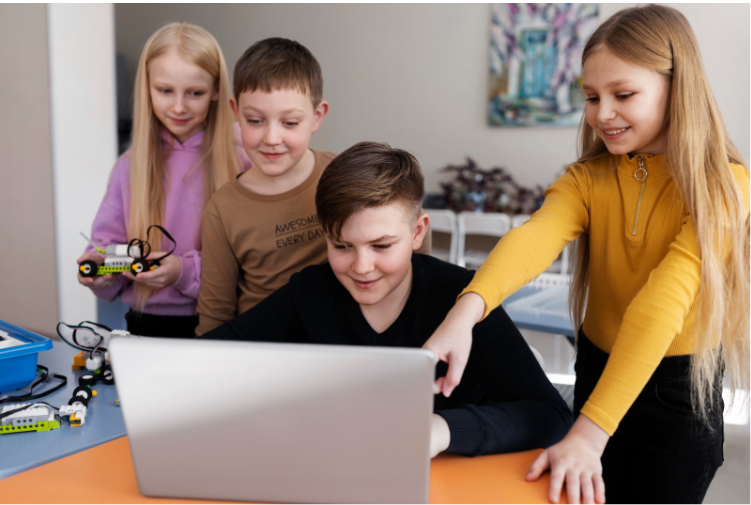
- robotics,
- automation,
- coding,
- engineering models,
- electronics,
- AI concepts,
- and practical experimentation.
Learning becomes interactive instead of passive.
Students Learn by Building in a STEM Enabled School (SES)
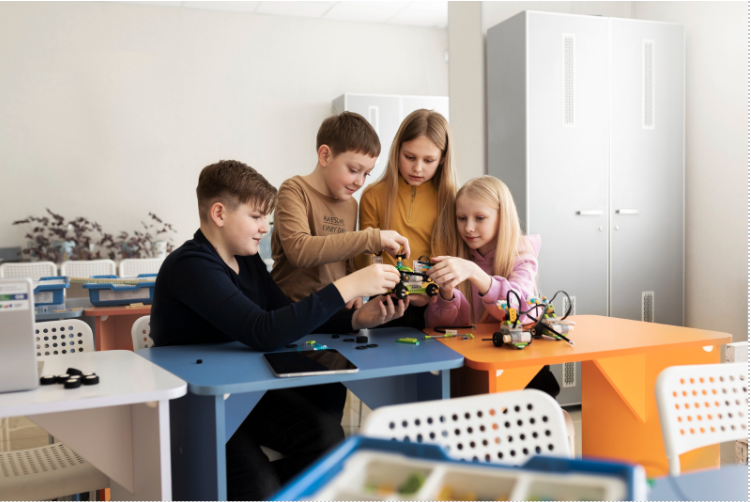
One of the strongest aspects of SES is that students become creators instead of only learners.
Children work on projects such as:
- obstacle-avoidance robots,
- line-following bots,
- robotic arms,
- smart-home systems,
- and automation prototypes.
For younger students, activities are designed to spark curiosity through playful STEM interaction. As students progress into higher grades, projects become more advanced and introduce:
- sensor integration,
- mechanical systems,
- coding logic,
- and structured engineering thinking.
This gradual progression creates deep familiarity with technology over time.
Why This Creates Better Outcomes After 5 Years
A child who only studies technology theoretically often remains hesitant around it.
But a child who spends years building, experimenting, and testing systems develops comfort and confidence naturally.
Over time, SES students often become:
- more curious,
- more confident with technology,
- better at problem-solving,
- and more comfortable experimenting independently.
This is one of the biggest differences parents begin noticing after several years.
YSRP: Introducing Research Thinking Years Earlier
Traditional education systems usually introduce research seriously only during college.
By then, many students are unfamiliar with:
- data analysis,
- research methodologies,
- structured investigation,
- academic writing,
- and interdisciplinary thinking.
The Young Student Research Programme (YSRP) by Makers’ Muse changes that timeline completely. Instead of waiting until adulthood, students begin experiencing research-oriented thinking while still in school.
Students Learn How Knowledge Is Created
YSRP teaches students how to:
- identify real-world problems,
- investigate ideas critically,
- analyse information,
- structure findings,
- and present conclusions logically.
This changes learning at a very fundamental level. Students stop becoming passive consumers of information and begin acting like investigators.
Exposure to Real-World Domains in a STEM Enabled School (SES)
Another major strength of YSRP is interdisciplinary exploration. Students may work on topics related to:
- Artificial Intelligence,
- environmental sustainability,
- healthcare,
- psychology,
- economics,
- biology,
- linguistics,
- and computer science.
This broad exposure helps children understand how different fields connect in real life. Traditional coaching systems rarely provide this kind of intellectual flexibility.
Research Exposure Builds Remarkable Confidence
Children who spend years in research-oriented environments in a STEM Enabled School (SES) often become much more comfortable:
- asking difficult questions,
- presenting ideas publicly,
- defending their reasoning,
- and exploring unfamiliar topics independently.
That confidence becomes valuable later during:
- university admissions,
- scholarship interviews,
- innovation competitions,
- internships,
- and future careers.
Over time, students begin developing a mindset focused on exploration rather than memorization. And that difference compounds significantly over five years.
Live Projects: Where Real Learning Actually Happens
Worksheets Test Memory. Live Projects Test Capability.
This is the single biggest difference between coaching-heavy systems and innovation-led ecosystems. Traditional worksheets evaluate recall and speed. Live projects evaluate application and execution. In the real world, nobody hands you a multiple-choice paper – they hand you a problem and ask for a solution. Our Live Project framework is designed to transition a student from a “learner” to a “contributor” through a professional 6-step cycle:
- Skill Matching: Identifying the student’s strengths to place them in the right role.
- Professional Onboarding: Joining a team and meeting a Project Mentor.
- Weekly Work Cycles: Completing tasks, receiving feedback, and escalating complexity.
- Live Deployment: Implementing the work so it functions in a real-world environment.
- Portfolio Documentation: Recording every contribution and skill mastered.
- Certification: Receiving a verified showcase of work for future college applications.
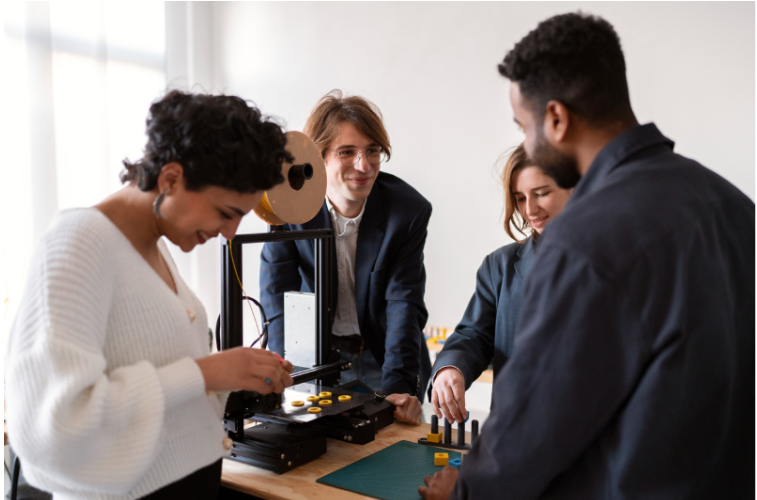
Makers’ Muse workshops are designed to introduce students to robotics, coding, AI, and STEM through hands-on, project-based learning. Instead of focusing only on theory, these workshops include inventions that emphasise building, experimenting, and understanding real-world applications of technology. The inventions are structured by grade level to ensure age-appropriate learning while gradually advancing in complexity.
Students Apply Concepts Instead of Memorising Them
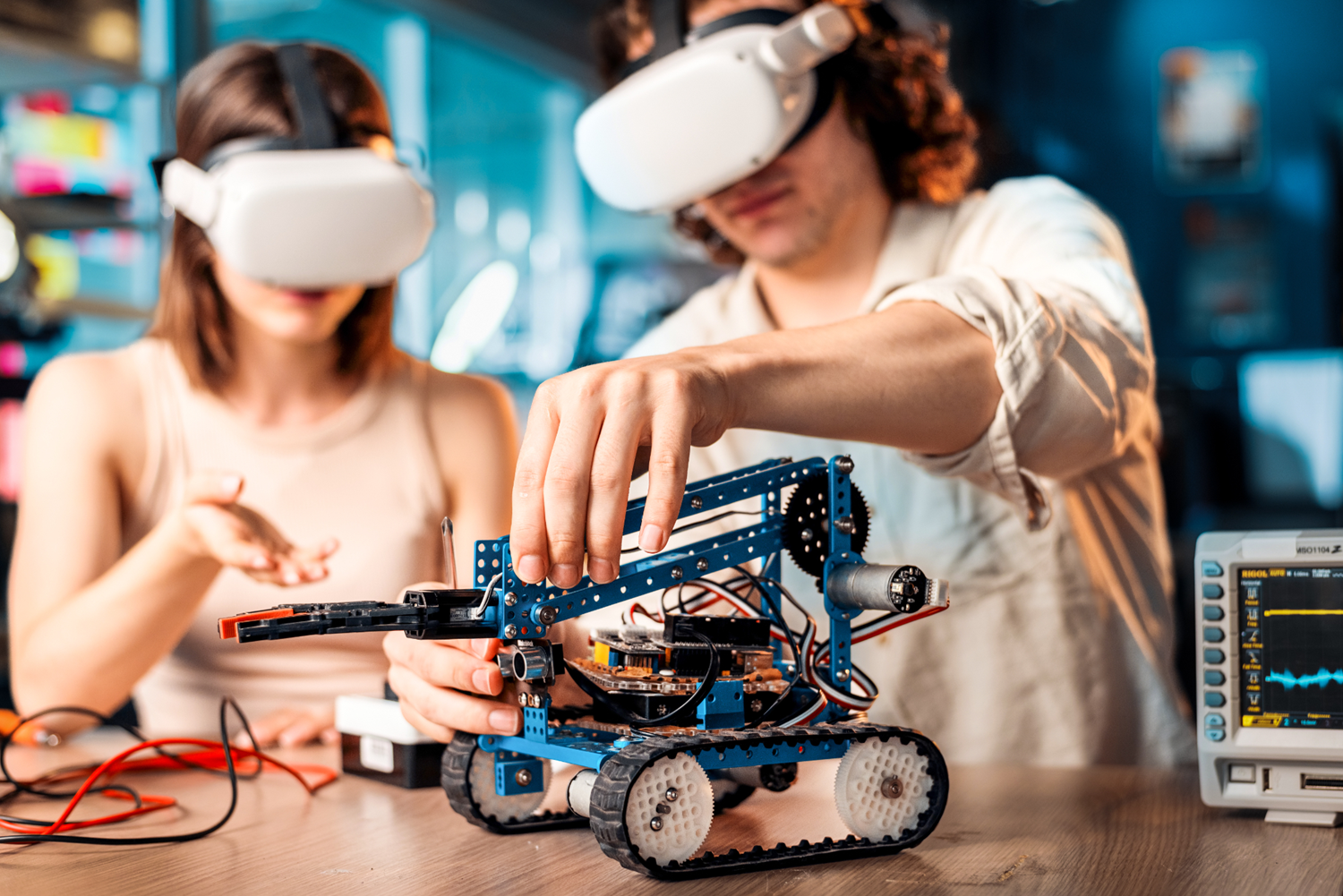
At Makers’ Muse, students do not only study STEM concepts theoretically. They apply them through practical projects that require planning, troubleshooting, and collaboration.
For example, building a smart-home automation system isn’t just one subject – it is a fusion of disciplines:
- Mathematics for sensor calibration.
- Electronics for hardware integration.
- Coding for the logic that brings the system to life.
- Communication for presenting how the solution works.
Why Live Projects Improve Long-Term Learning
Experiential learning creates stronger retention because it is tied to an action. A child who memorises motion equations may forget them after the semester ends. But a child who uses those same principles to build a working robotic arm understands those physics at a “gut” level.
By the end of five years, these students don’t just have a folder full of old test papers. They have a verified professional portfolio and the confidence of someone who has already built, tested, and shipped real-world solutions.
SES, YSRP & Live Projects Together Create a Very Different Student
When these three systems work together over several years, the outcomes become very visible.
Students gradually become:
- more independent,
- more articulate,
- more adaptable,
- and more comfortable solving unfamiliar problems.
Many begin:
- researching voluntarily,
- experimenting outside classrooms,
- presenting ideas confidently,
- and exploring technology without fear.
This is very different from students who only learn within exam-focused environments.
Why SES Ecosystems Feel More Relevant than Coaching Classes
The future workforce will be shaped heavily by:
- Artificial Intelligence
- Robotics
- Automation
- Biotechnology
- Climate technology
- Digital systems
Even non-technical professions increasingly require technological familiarity and adaptability.
Children in a STEM Enabled School (SES) exposed early to:
- coding,
- robotics,
- research,
- engineering thinking,
- and innovation culture
often become far more comfortable navigating future industries later.
Technology stops feeling intimidating because they grow up interacting with it directly.
The Future Rewards Thinkers and Builders
Earlier generations succeeded largely through information access. Today, information is available instantly.
The real advantage now lies in:
- applying knowledge,
- solving problems,
- communicating ideas,
- and creating meaningful solutions.
This is exactly what SES, YSRP, and live project ecosystems are designed to nurture.
Final Thoughts
Traditional coaching classes can still help students improve their marks and prepare for examinations. But the modern world demands much more than academic repetition alone.
Programmes like SES, YSRP, and live project ecosystems in a STEM Enabled School (SES) are creating students who are not only academically capable but also technologically fluent, research-oriented, adaptable, creative, and confident in solving real-world problems.