

How to Make Free Electricity Generator Working Model Using DC Motor Project
Creating a simple electricity generator using a DC motor is a popular science project that helps students understand how electrical energy can be produced from mechanical motion. This project is commonly demonstrated in school exhibitions because it clearly shows the conversion of mechanical energy into electrical energy. By rotating a DC motor manually or using a flywheel, electricity can be generated to power small components like LEDs.
This article explains the concept of a free energy generator, the role of a flywheel, the use of capacitors, and the working of a permanent magnet DC motor in a simple and easy-to-understand manner.
What is Free Energy Generator?
A free energy generator is a commonly used term in science projects to describe a system that generates electricity using available mechanical motion without relying on large external power sources. In most educational models, this energy is produced by converting mechanical rotation into electrical energy using a DC motor.
In simple terms, when the shaft of a DC motor rotates, it works like a generator. The rotating motion inside the motor moves a coil through a magnetic field, which produces electric current. This phenomenon is based on electromagnetic induction.
For a school project, students usually rotate the motor using a wheel, hand crank, or flywheel. The generated electricity can be used to glow LEDs or charge small electronic components. The main goal of this project is to demonstrate energy conversion rather than producing unlimited energy.
Flywheel Moment of Inertia Derivation
A flywheel plays an important role in generator models because it helps maintain rotational motion. The effectiveness of a flywheel is related to its moment of inertia.
Moment of inertia describes how resistant a rotating object is to changes in its motion. For a solid circular flywheel, the moment of inertia is given by the formula:
I = (1/2)MR²
Where:
I = moment of inertia
M = mass of the flywheel
R = radius of the flywheel
This equation shows that the inertia depends on both the mass and the radius of the wheel. A heavier flywheel or one with a larger radius stores more rotational energy. Because of this stored energy, the flywheel continues rotating even after the initial force is reduced.
In generator projects, the flywheel helps keep the DC motor spinning longer, which allows more electricity to be generated.
Flywheel Working
A flywheel is a heavy rotating wheel that stores kinetic energy. It helps maintain consistent motion in mechanical systems.
When you spin a flywheel, energy is stored in the form of rotational kinetic energy. Once the wheel starts rotating, it continues spinning due to its inertia. This stored energy can be used to drive other mechanical components.
In a generator project, the flywheel is connected to the shaft of a DC motor. When the flywheel spins, it rotates the motor shaft. As the shaft rotates inside the magnetic field of the motor, electrical energy is produced.
Flywheels are used in many machines such as engines, turbines, and energy storage systems because they help stabilize motion and improve efficiency.
Making of Free Energy Using a Capacitor
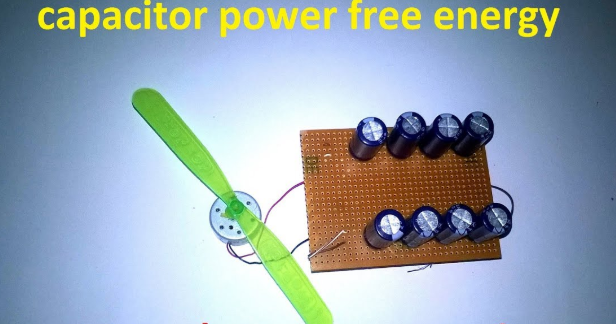
Capacitors are electronic components that store electrical energy temporarily. They are often used in generator projects to store and release the energy produced by the DC motor.
A capacitor consists of two conductive plates separated by an insulating material called a dielectric. When electricity flows into the capacitor, positive and negative charges accumulate on the plates. This stored energy can later be released into a circuit.
In a free electricity generator model, the electricity produced by the DC motor can be directed into a capacitor. The capacitor stores this energy and releases it slowly, allowing devices such as LEDs to glow steadily.
Using capacitors in the project helps demonstrate energy storage concepts and improves the stability of the output voltage.
Permanent Magnet DC Motor
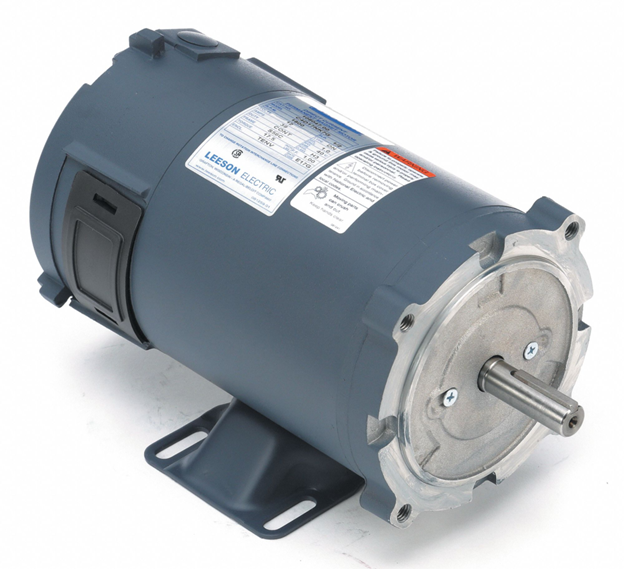
A permanent magnet DC motor is one of the most commonly used motors in small electrical devices and science projects. It works using the interaction between a magnetic field and electric current.
This motor contains permanent magnets that create a constant magnetic field inside the motor casing. The rotating part, called the armature, carries electric current through coils. When current flows through these coils, it interacts with the magnetic field and produces rotational motion.
Interestingly, this process can work in reverse. When the shaft of the motor is rotated manually, the coils move inside the magnetic field and generate electricity. Because of this property, a DC motor can function as both a motor and a generator.
This dual functionality makes it ideal for school science models and small energy generation experiments.
Free Energy Generator Advantages and Disadvantages
A free electricity generator model has several educational advantages.
One of the biggest advantages is that it helps students understand the principles of electricity generation in a practical way. Instead of learning only theoretical concepts, students can observe how mechanical motion produces electrical energy.
Another advantage is that the project is inexpensive and easy to build. Most components such as DC motors, wires, LEDs, and capacitors are easily available in electronic stores. This makes it suitable for science exhibitions and classroom demonstrations.
The model also promotes interest in renewable energy technologies. By experimenting with mechanical energy sources like hand rotation, wind, or water flow, students can learn about sustainable energy generation.
However, there are also some limitations. These small models cannot produce large amounts of electricity. The generated power is usually enough only for small devices like LEDs.
Another disadvantage is that the system still requires mechanical input to operate. Energy must come from somewhere, such as manual rotation or a moving wheel.
Despite these limitations, the project remains an excellent educational tool for understanding the fundamentals of energy conversion and electricity generation.
Learn More about STEM Education